
They Didn’t Build It. They Found It.
Unplug from everything. Including the history they taught you.

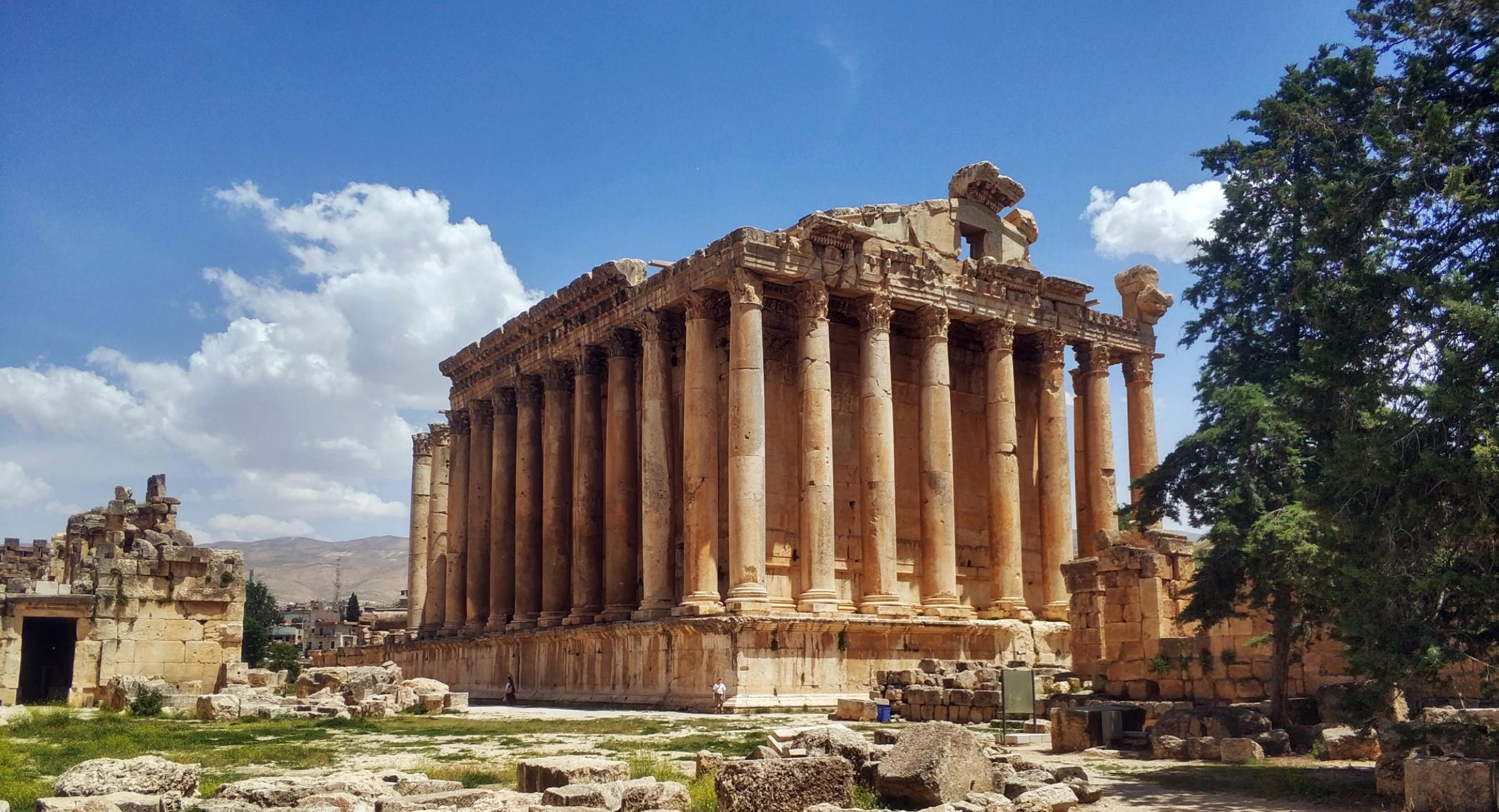
I have spent years telling men to unplug from the comforting lies that society, culture, religion, and mainstream media have been feeding them since birth. The lies about women. The lies about government. The lies about what a man is supposed to want and who he is supposed to be.
But unplugging does not stop there. Not if you are serious about it.
One of the things that continues to make absolutely no sense to me is what we are told about the ancient world. The mainstream story goes like this: our early human ancestors, using bronze age tools, ropes, wooden sledges, and raw manpower, somehow built the most massive stone structures found on the surface of this planet. The Pyramids of Giza. Baalbek. Saqsaywaman. Dozens of others scattered across the globe on every continent, in every climate, separated by thousands of miles and thousands of years.
Nothing adds up when you start asking the right questions. And here is the uncomfortable truth - even today, with everything we have built and everything we know, we do not possess the technology or the engineering capability to replicate these structures. Not the way they were originally built. Not with that precision. Not at that scale.
So who did?
Look, I know what the skeptics are going to say. Modern cranes can lift a thousand tons. We can machine granite to high precision. Both true. Nobody’s arguing that.
What they can’t show you - and I want you to notice that they never actually show you this - is a single example of a thousand-ton granite monolith that has been quarried, machined to sub-millimeter tolerances, transported over 600 miles across mountain ranges, raised into position, and fitted together with the precision of a Swiss watch. All of it. One project. Start to finish. Because that has never been done. Not by us. Not anywhere. Not once.
The individual pieces may exist. The complete picture doesn’t. And yet somehow, someone did exactly that - repeatedly, at multiple sites, on multiple continents - and left behind zero documentation of how. If a modern construction company pulled this off, there would be press releases, engineering white papers, and a Netflix documentary. There is none of that.
Start With Baalbek
If you want to understand why the mainstream story does not hold together, start with Baalbek in Lebanon. Located in the Bekaa Valley about sixty miles northeast of Beirut, roughly 3,000 feet above sea level, this site contains what may be the single most powerful piece of physical evidence that something is seriously wrong with the history we have been handed.
Buried in the foundation of what the Romans later built as their Temple of Jupiter, there are three massive stone blocks known as the trilithons. Each one is about 19 metres (62 ft) long, 4.2 metres (14 ft) high, and 3.6 metres (12 ft) thick, and weighs around 750–800 metric tons. To give you a sense of scale - each trilithon is roughly thirty-six times heavier than the stones used at Stonehenge, and about ten times heavier than the largest stones in the Great Pyramid of Giza. These are not big stones by ancient standards. They are in a category entirely their own.
These blocks were quarried from a site more than half a mile away. They were transported across uneven terrain. They were then raised approximately thirty feet off the ground and placed on top of 400-ton stones beneath them with a precision so exact that not even a piece of paper can fit in the joints between them.
Here is the problem. Roman historical records are extraordinarily thorough. The Romans documented almost every major construction project they undertook in detail. There is not a single Roman record that explains how these stones were moved, lifted, or positioned. Not one. The Romans were famous for drilling lewis holes into stones so that cranes could grip them for lifting. The trilithon blocks have no lewis holes. And even if they did, it would not matter - known Roman crane designs, reconstructed from Vitruvius, Heron, and archaeological remains, have estimated practical lifting capacities in the range of a few to a few dozen tons per crane; there is no direct evidence of any Roman lifting device capable of hoisting loads on the order of 500 tons or more. These blocks weigh 750-800 tons. That is not an engineering gap you can close with more rope and pulleys.
What makes it stranger still is that the trilithons were never meant to be seen. They are buried in the foundation. Hidden underground. They served a purely structural purpose, which means whoever placed them there was not building for aesthetics or legacy. They were building for function, at a scale that no known civilization in recorded history had any reason or ability to achieve.
The Romans Built on Top of Something They Did Not Understand
When you stand at Baalbek and look at the site carefully, something becomes very clear. There are two completely different construction standards visible at the same location.
The Roman work above - the Temple of Jupiter, the enormous columns, the dressed stone walls - is impressive by any measure. The Roman columns alone are the largest stone columns in classical history, each rising sixty-five feet in the air, assembled from stacked sections averaging around sixty metric tons each. That is right at the upper practical limit of what Roman engineering could manage, and it shows. You can see the lewis holes. You can see the joints between the drum sections. You understand how it was built.
Then you look at what sits underneath it, and you are looking at something from a completely different world.
The megalithic foundation blocks - including the trilithons and the surrounding 800-ton stones - display a level of precision that the Roman work above does not come close to matching. Joints so tight that a razor blade cannot fit between them, horizontal or vertical. Surface finishes on rose granite - one of the hardest materials on earth - that are polished smooth with perfectly sharp transitions between curved and flat surfaces. Chamfered edges identical on adjoining blocks to a fraction of a millimeter. A continuous line less than a millimeter thick running along the beveled edges of the stones.
Think about what that means. A line less than a millimeter thick, perfectly consistent, running along the edge of a block weighing hundreds of tons.1 You cannot produce that with a chisel and a hammer. You cannot produce that with any hand tool. The precision is not ancient. It is beyond modern standards applied to ancient stone.
The Rose Granite Columns - From Over 600 Miles Away
Beyond the trilithons, there is another mystery at Baalbek that gets almost no attention.
Alongside the Roman columns, archaeologists found the remains of a much older set of columns. Around two hundred of them, most now shattered, scattered across the complex. Unlike the Roman columns, which were made from local limestone and assembled from stacked sections, these earlier columns were carved from rose granite and formed as single monolithic pieces. Each one a single, solid shaft of some of the hardest stone on earth.
The rose granite did not come from Lebanon. It came from Aswan, Egypt. More than a six-hundred miles away. This is the same quarry that supplied the granite for the King’s Chamber in the Great Pyramid of Giza, a journey of over five hundred miles - itself an extraordinary logistical achievement. Getting granite to Baalbek would have required transporting monolithic columns across the Lebanon Mountains, which average over 8,000 feet in elevation. No road. No flat terrain. No explanation.
And then consider the finish on those columns. Granite requires diamond-tipped tools or equivalent hardness to shape with precision. Such tools were not widely available until the late 19th century. Yet these columns are polished to an exceptionally smooth, perfectly rounded finish, with sharp, clean transitions between surfaces, and no obvious flaws after thousands of years of exposure.
Most of them are now in pieces. The degree of destruction across the site looks, to the untrained eye, like the result of some violent cataclysmic event. Researchers who have studied the fragments closely have found markings on the broken stone that resemble the kind of striations left by heavy industrial machinery, and traces of iron oxidization that suggest metal cutting tools of significant power.
The Quarry - Where It Gets Even Stranger
About a mile from the main complex sits the quarry that supplied Baalbek’s stones. And the quarry may be the most important piece of the puzzle.
The most famous stone there is the Stone of the Pregnant Woman, a monolith lying partially attached to the bedrock, measuring roughly sixty-eight feet long and estimated to weigh over 1,000 tons. It appears to have been nearly ready for transport when work suddenly stopped. Why the work stopped, nobody knows.
In 2014, archaeologists excavating beneath and beside the Stone of the Pregnant Woman found something they were not expecting. Another monolith, larger still, lying just underneath. It weighs approximately 1,650 tons. It may be the largest quarried stone block ever discovered anywhere on earth. It became known as the Forgotten Stone. They found it ten years ago, buried under centuries of accumulated earth. Which raises an obvious question: how much of the quarry remains unexcavated? What else is down there?
The route from the quarry to the temple complex is uphill, across rough and winding terrain. There is no evidence that a flat hauling road was ever built. There is no obvious location where pulley machinery of the necessary scale could have been installed given the arrangement of the stones and the surrounding landscape. Even if you imagine cranes with the capacity of modern equipment - which would require more cranes than could physically fit around a single stone - you still cannot explain how the stones were moved uphill from the quarry to the site and raised thirty feet into position with that level of precision.
The accumulation of earth over the quarry itself suggests the site is vastly older than mainstream archaeology assumes. The Romans who built their temple on top of the existing platform did not build the platform. They found it. And they built on top of it because it was already there, already stable, already extraordinary.
My Conclusion
Here is what I think, and I want to be direct about it.
I do not believe our ancestors built these structures with bronze tools and human labor. That explanation requires you to ignore the engineering reality of what you are looking at.
I also do not believe our ancestors possessed some advanced technology that we have simply forgotten. The trajectory of human technological development does not support a lost-and-found theory of that kind.
What I think is more likely - and the physical evidence at Baalbek points toward this - is that our ancestors found these structures. They did not build the megalithic foundations. They discovered them, already ancient, already partially buried, and they built on top of them. The Romans built their Temple of Jupiter on a platform they did not create and could not have created. The Phoenicians before them raised a temple to Baal on the same site they did not originally build. And before all of them, something else was here.
Who built it? A civilization that predates anything in our recorded history. How far back? Possibly tens of thousands of years. The evidence of erosion on the trilithon stones, the depth of earth that accumulated over the quarry, and the site’s continuous habitation going back to at least 9,000 BCE all point toward a timeline that makes our written history look like the last chapter of a very long book.
Was it an advanced human civilization that collapsed and left no other record? Possibly. Are there other explanations that people entertain? Yes, and I am not going to dismiss them out of hand. What I will say is that the explanation we have been given - primitive people with ropes and copper tools - is the one explanation that definitively does not work when you apply basic physics to it.
There is also a question that I have not seen anyone answer satisfactorily. These structures - Baalbek, the Pyramids, Saqsaywaman and the others - predate the Bible. All of them. The biblical record begins somewhere around 4,000 years ago. The megalithic foundations at Baalbek may be three times that age or older. Yet there is absolutely zero reference in scripture to any of these structures, which were sitting right there in the same part of the world where those stories were set. Why? What does that absence tell us?
Unplug. Not just from the narratives about women and politics and government. Unplug from the story of who we are and where we come from, because that story has been told by people with their own interests in keeping you comfortable and incurious.
The video below is a good starting point if this is new territory for you.
Disclosure: As an Amazon Associate I earn from qualifying purchases.
While mainstream archaeologists, classicists, and engineering-minded skeptics routinely dismiss claims of extraordinary precision at Baalbek as exaggeration or pseudo-history, the publicly available mainstream material still does not appear to provide the obvious evidentiary basis that would be needed to refute such claims in a technically serious way - namely instrument-based joint measurements, laser-scan point clouds, surface profiles, tolerance tables, or any published dataset showing what the actual gaps and deviations are across the trilithon contact faces themselves (Baalbek Stones overview; The Myth of the Megalith; Transporting the Trilithon Stones of Baalbek). By contrast, non-mainstream observers and megalithic-precision writers openly make the disputed claim from direct inspection or descriptive observation - that the stones are fitted with millimeter-scale or even sub-millimeter precision, with seams narrower than a knife blade or razor blade, and in some cases with alignment “within millimeters” - but these sources also usually stop short of publishing raw measurement data (“Millimeter precision” article; Baalbek Mystery; Satyori Baalbek page). The asymmetry matters: if establishment scholars insist the precision claims are false, overstated, or misunderstood, then the burden is on them to publish the measurements needed to demonstrate that, especially since they are the side with the institutional budgets, the professional authority, and the surveying tools to do it, whereas independent visitors are often doing no more than reporting what they say they observed in person from the stones themselves.
Modern man will understand in time that the price he paid for removing the Divine from his life is constant anxiety.
FWIW will throw something into the mix; The Bible speaks on this in limited fashion. Early in earth’s history there was a race of giants - literally - called the Nephilim. According to The Bible they were the offspring of The Sons of God (Angels)& human women. Not only were they huge but their strength was super human. Also- according to The Bible - something went terribly wrong which led God to wipe out humanity in The Flood during Noah to rid the world of them.
The type of structures described above could only be manhandled by creatures of such size.
More here: https://www.christianity.com/wiki/angels-and-demons/who-were-the-nephilim-in-the-bible.html?gad_source=1&gad_campaignid=23744156773&gbraid=0AAAAAD7cQFV90-foolxo57xnhVT98sLMI&gclid=Cj0KCQjwrZTRBhDSARIsAHidYfcrC3_9PI-b6QmR2Dem_-vHqqpEUrc3EB434phzcVtDfYMWBQa3Ll4aAh4DEALw_wcB